

Couple living apart due to foreign employment discussing fertility options
Blog Details
- Home
- Blog Details
Couple Living Apart Due to Foreign Employment
Couples Living Apart Due to Foreign Employment
The calendar on your wall has a red circle around a date three months away. That is the day your husband comes home from Dubai. You have been tracking your body temperature, checking ovulation strips, and praying silently. But last time, he was here for only 12 days. Your period came the morning after he left. You smiled on the video call and said, "It's okay, next time." But after the call ended, you sat in silence for a long time.
If this story feels familiar, you are not alone. Millions of couples living apart due to foreign employment face the same quiet heartbreak. You are trying to build a family while building a future. The distance is not your fault. The timing is not your failure. And yes, there are real, medical, and practical solutions that work. This guide is written for you. It combines emotional truth, biological reality, and step-by-step plans for couples living apart due to foreign employment who want to conceive.
Why Couples Living Apart Struggle to Conceive
When you live in different countries, getting pregnant becomes a puzzle of time, biology, and logistics. It is not about love or effort. It is about how the female body works and how rarely your schedules align.
Biological Timing and Fertile Window
A woman can only get pregnant on six days each month. These are the five days before ovulation and the day of ovulation itself. That is it. The rest of the month, pregnancy is biologically impossible.
If your husband arrives on the 10th and you ovulate on the 18th, you have already missed the window. You have missed it again if he leaves on the 20th and you ovulate on the 24th. This is the single biggest reason why couples who live apart due to foreign employment struggle. It is not a lack of intimacy. It is a lack of overlapping calendars.
Emotional Stress and Hormonal Impact
Stress does not just feel bad. It changes your hormones. High cortisol from loneliness, financial pressure, and repeated disappointment can delay ovulation or stop it entirely. Some months, your body may not release an egg at all.
You cannot relax your way into pregnancy. But you should know that the anxiety you feel counting days and booking flights is having a real physical effect. That is not your fault. It is biology.
Limited Physical Presence
If you have only 15 days together every six months, you may get only one or two fertile windows per year. A typical couple living together has 12 chances annually. You may have two. This is not a failure of effort. It is a mathematical reality that requires smarter planning.
Real Challenges in Long-Distance Marriage Fertility
Let us name the hard things directly. You are already thinking about them.
Travel and Visa Limitations
You cannot simply book a flight when the ovulation strip turns positive. Visas take weeks. Leave approvals take longer. Tickets are expensive. By the time he arrives, your fertile window closed yesterday.
Ovulation Timing Mismatch
Even with perfect tracking, ovulation can shift by a few days due to illness, stress, or sleep changes. A three-day shift means a missed month. After two or three missed months, hope starts to feel heavy.
Financial Pressure and Planning
Every pregnancy attempt involves flight costs, leave without pay, and sometimes hotel stays. When it does not work, you feel you have wasted money, not just time. That financial guilt adds another layer of emotional weight.
Social and Family Expectations
Relatives ask, "Still not pregnant?" Neighbors whisper. Your mother suggests you visit a temple or a clinic. Everyone has an opinion. No one understands that your husband was home for only nine days last year. The pressure makes you feel broken. You are not.
Can You Get Pregnant While Living Apart?
When Natural Pregnancy Is Possible
Yes, you can get pregnant while living apart if you have at least one fertile day overlapping with physical presence. With accurate ovulation tracking and advanced visit planning timed to your predicted fertile window, natural conception is possible even with limited annual days together.
Success Rate Reality
For a healthy couple under 35 living together, the monthly chance of pregnancy is about 20 to 25 percent. The annual chance of pregnancy drops significantly for couples living apart due to foreign employment, as they have only two overlapping fertile windows per year. This does not mean it is impossible. It means you need a strategy, not just luck. Many couples succeed naturally within 12 to 18 months of planned visits. Others benefit from medical help earlier.
Best Solutions for Couples Living Apart Due to Foreign Employment
You do not have to leave your future to chance. Thousands of couples in Nepal, India, Bangladesh, and the Gulf use these proven solutions.
Smart Ovulation Tracking and Visit Planning
Stop guessing. Use a combination of ovulation predictor kits, basal body temperature tracking, and a period tracking app like Clue or Flo. Try exercising three full cycles before planning a visit. You will see your pattern. Then book his leave to cover your predicted fertile window plus two extra days on each side.
Sperm Freezing (Step-by-Step)
This is the most powerful solution for long-distance couples.
Step 1: Your husband visits a fertility clinic in his country of employment. He provides a semen sample.
Step 2: The lab freezes and stores the sample safely.
Step 3: The frozen sample is shipped to a fertility clinic near you.
Step 4: When you are ovulating, the clinic performs intrauterine insemination (IUI) using his frozen sperm. You do not need him to be present.
This solution completely resolves the timing problem. You can try every single month, regardless of where he is.
IVF for Couples Living Abroad
IVF is more advanced but also more effective. Eggs are collected from you after hormone injections. They are fertilized with his sperm (fresh or frozen) in a lab. The resulting embryo is placed into your uterus. The entire process can be coordinated around his brief visit or using frozen sperm.
Medical Fertility Planning
See a reproductive specialist before you have tried for one year. For long-distance couples, the standard waiting period is too long. A good doctor will run basic tests for both of you, check your ovarian reserve, and advise on whether to try naturally, use frozen sperm with IUI, or move to IVF.
IVF and Fertility Treatments Explained Simply
Medical terms can feel frightening. Here is what they actually mean.
IVF Process Step-by-Step
You take daily hormone injections for about 10 to 12 days to help your ovaries produce multiple eggs. The doctor collects those eggs in a 15-minute procedure. In a lab, your eggs are combined with your husband's sperm. A fertilized egg becomes an embryo. After five days, one healthy embryo is placed into your uterus. You wait 10 days for a pregnancy test.
IUI vs IVF: Which Is Better
IUI is simpler and cheaper. Washed sperm is placed directly into your uterus near the time of ovulation. It works best when you have no major fertility issues and your fallopian tubes are open.
IVF is pricier and more effective. It bypasses the fallopian tubes entirely. For couples living apart due to foreign employment with limited visits, IVF often makes sense because one visit can provide multiple embryos for future attempts. However, choosing between these treatments depends on factors such as age, fertility health, and treatment goals. Understanding the differences between IUI and IVF can help couples make informed decisions about their fertility journey. Explore the key differences between IUI and IVF to understand their success rates, costs, and who benefits most from each treatment.
Frozen Embryo Transfer (FET)
If you produce extra embryos during an IVF cycle, they can be frozen. In a future month, a frozen embryo can be thawed and transferred to your uterus without needing hormone injections or egg collection. You can do this while your husband is abroad. It is simpler, cheaper, and less stressful than a full IVF cycle.
Emotional Impact of Trying to Conceive While Living Apart
The medical part is only half the story. The emotional part is where you actually live.
Mental Stress and Loneliness
You take pregnancy tests alone. You see negative results alone. You attend fertility appointments alone while other women hold their husbands' hands. That specific loneliness is hard to explain to someone who has not lived it. It is real. It is heavy. And it is okay to admit that it hurts.
Relationship Pressure
Every video call becomes a medical update. "Did you ovulate?" "When is your period?" "Did you test?" The romance can feel replaced by a project. Some couples stop talking about feelings and only talk about logistics. That distance can become wider than the ocean between you.
Coping Strategies for Couples
Schedule two kinds of calls. One for fertility planning and one for connection, where pregnancy is not mentioned. Send voice notes, not just texts. Write letters. Remind each other that you are a married couple first and a fertility team second. And please, talk to one friend or family member who will simply listen without giving advice.
Real-Life Success Stories (Relatable Scenarios)
Case Study: Nepal to Gulf Couple
Asha in Kathmandu and Raj in Qatar tried for 14 months. He came home twice a year for 10 days each time. She tracked her cycles perfectly. After six missed fertile windows, she felt hopeless. A doctor suggested sperm freezing. Raj provided a sample in Doha. It was shipped to Kathmandu. On the third IUI cycle using his frozen sperm, Asha became pregnant. Their daughter is now two years old. Raj was on a video call when Asha took the positive test.
What Worked for Them
They stopped relying only on his physical visits. They used frozen sperm to create monthly attempts. They consulted a fertility specialist after only eight months instead of waiting a full year. They also stopped blaming each other. The distance was the problem, not their love or their bodies.
Step-by-Step Pregnancy Plan for Long-Distance Couples
You need a timeline, not just hope.
Month-by-Month Strategy
Months 1 to 3: Track ovulation daily. Learn your pattern. Do not try yet. Just gather data.
Month 4: Have a video consultation with a fertility doctor. Ask for basic blood tests and a semen analysis during his next visit.
Months 5 to 8: Plan his visit to overlap with your predicted fertile window. Try naturally for up to four overlapping windows.
Month 9: If not pregnant, discuss sperm freezing or IUI with your doctor.
Months 10 to 12: Begin IUI cycles using frozen sperm every month.
Month 13: If IUI fails twice, consider IVF or frozen embryo transfer.
When to Seek Medical Help
Do not wait one year. For couples living apart due to foreign employment, seek medical advice after six cycles of well-timed attempts or after 12 months of trying overall, whichever comes first. If you are over 35, seek help after six months total.
Frequently Asked Questions
Can couples living apart get pregnant naturally?
Yes, a natural pregnancy is possible if physical presence overlaps with the woman's six-day fertile window. Accurate ovulation tracking and planned visits timed to that window give the best chance, even with only two or three visits per year.
What is the best fertility option for long-distance couples?
Sperm freezing combined with intrauterine insemination (IUI) is often the best first step. It allows monthly attempts without requiring the husband to be present. IVF with frozen embryo transfer is another excellent option for older couples or those with additional fertility factors
How does sperm freezing help pregnancy?
Sperm freezing allows a man to provide a sample once while abroad. That frozen sample is shipped to his partner's clinic. During her ovulation, the clinic can perform insemination without him traveling. This removes the timing problem completely.
Is IVF necessary for couples living abroad?
No, IVF is not always necessary. Many couples succeed with natural timing or IUI using frozen sperm. IVF becomes more valuable when the woman is over 37, when the fallopian tubes are blocked, or after multiple failed IUI cycles.
How to track ovulation accurately?
Use ovulation predictor kits that detect the LH surge 24 to 36 hours before ovulation. Confirm with basal body temperature tracking. Do this for three full cycles before planning a visit to see your unique pattern.
How long should we try before treatment?
For couples living apart due to foreign employment, seek medical help after six well-timed cycles or 12 months total. Do not wait longer than this. Distance already reduces your chances per year. Early testing saves time and emotional energy.
Our Latest Blogs

Infertility Myths and Facts in Nepal: What Couples...
Quick AnswerInfertility affects an estimated 1 in 6 people globally during their reproductive years,...
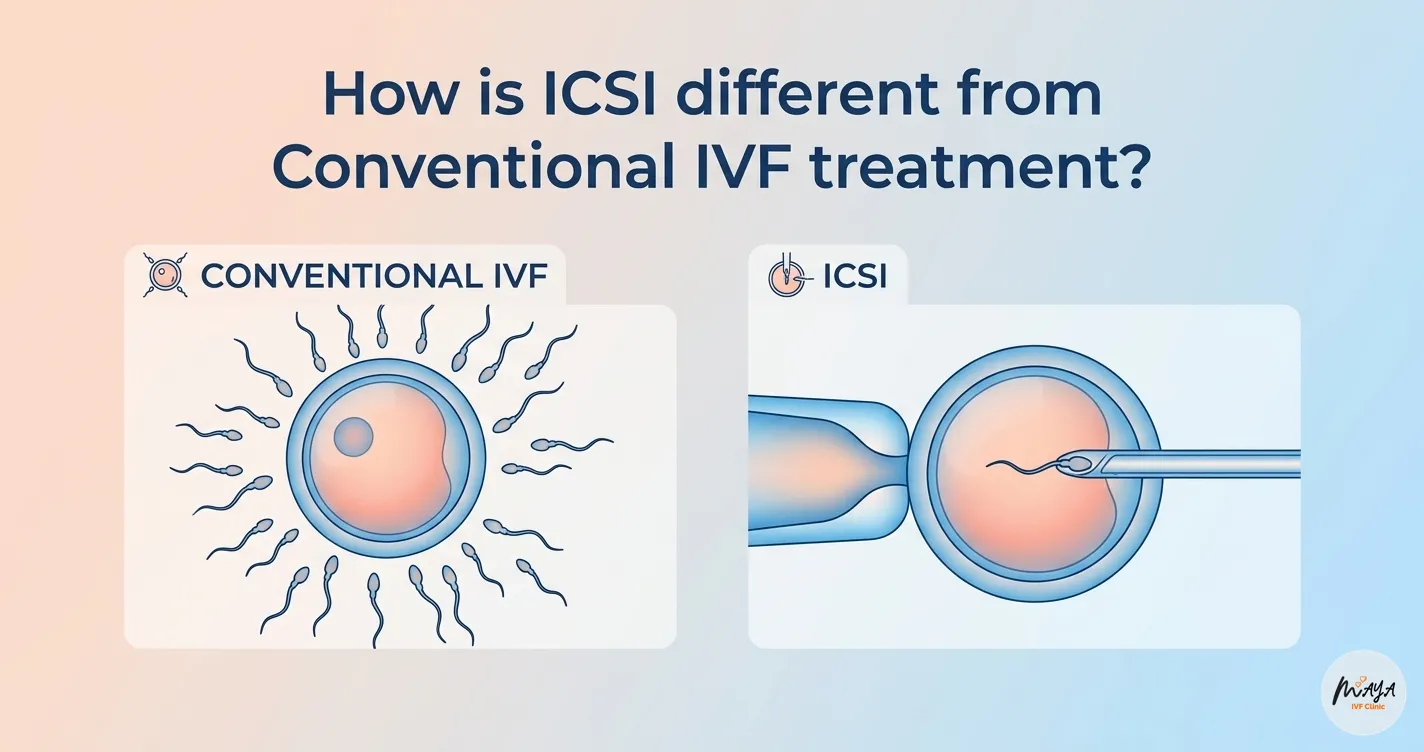
How is ICSI different from Conventional IVF treatm...
ICSI and Conventional IVF both are forms of assisted reproductive treatment (ART) in which eggs are...
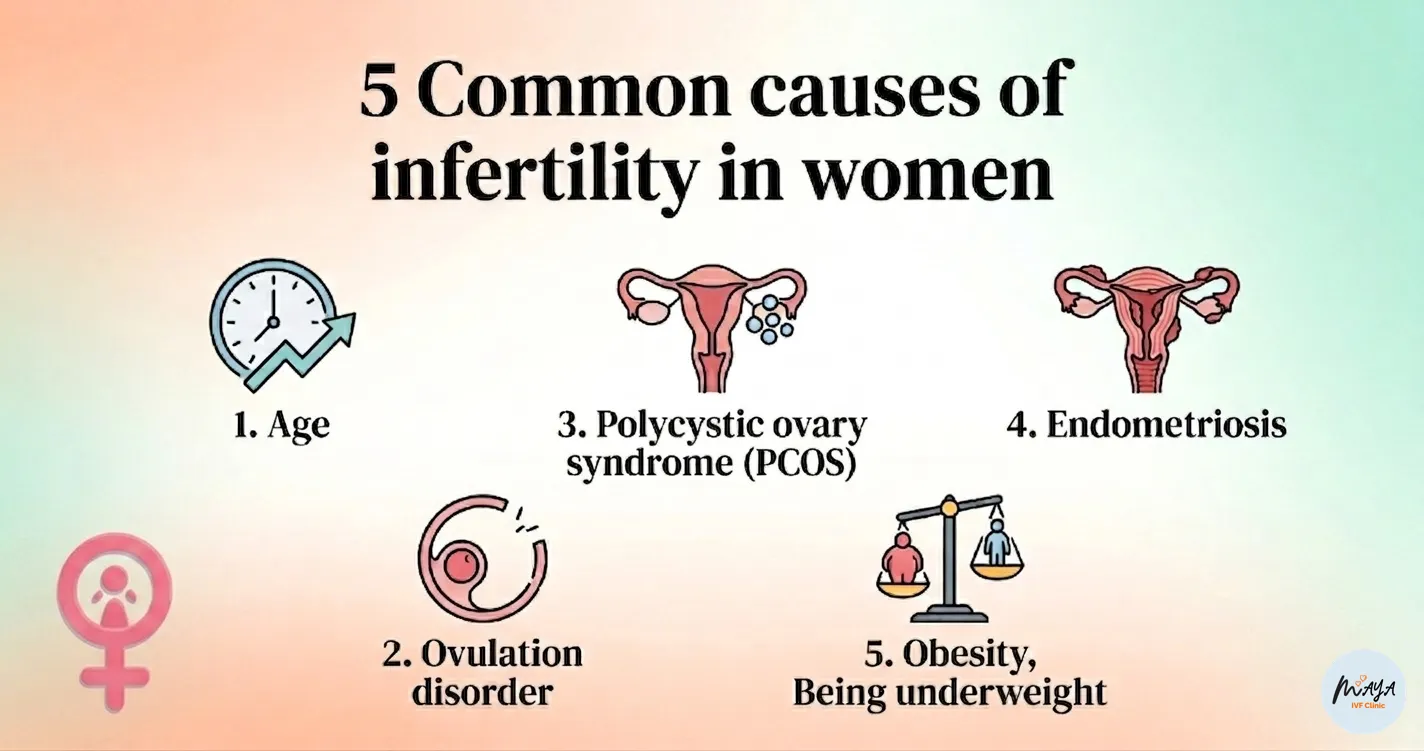
5 Common causes of infertility in women
A condition is diagnosed as infertility when a heterosexual couple is unable to conceive after one y...

 Nepal International Fertility and Laparoscopic Centre (NIFLC).
All rights reserved.
Nepal International Fertility and Laparoscopic Centre (NIFLC).
All rights reserved.